

® Carlos Alguacil for Rittagraf
The Manual Film Positive in Screen Printing and Photomechanical Techniques
Any photomechanical process relies on the quality of the positive, commonly known as the film positive.
In simple terms, a film positive is an opaque graphic image, created either digitally or manually, on a transparent or sufficiently translucent support. In this guide, we focus on manual or hand-drawn film positives, a widely used solution in screen printing workshops, printmaking studios and experimental photographic processes.
The film positive is the essential tool used to close the printing matrix in photomechanical techniques such as:
- Screen printing (using photosensitive emulsions)
- Offset or photolithography
- Photopolymer plate engraving
- Heliogravure
- Letterpress with photopolymer plates
- Flexography
- Pad printing
- Alternative photographic processes such as:
- Cyanotype
- Van Dyke brown
- Calotype
- Salted paper processes
- Any technique involving light-sensitive chemical reactions
For this reason, controlling the quality of the positive is essential to achieve consistent and professional results.
What Are Manual or Hand-Drawn Film Positives?
Manual film positives, also known as hand-drawn or autographic film positives, are positives created directly by hand on a transparent or translucent support.
For this reason, the graphic tools used must meet two essential requirements:
- They must be sufficiently opaque to block UV light
- They must adhere correctly to the chosen transparent or translucent surface
Drawing Materials for Making Manual Film Positives
Below we detail the most common drawing materials used to create manual film positives.
Manual Film Positives with Actinic-Blocking Markers – Precision for Retouching
These are markers filled with actinic-blocking ink, meaning the ink does not allow ultraviolet (UV) light to pass through. This makes them suitable for most photomechanical techniques.
They are alcohol-based inks and were historically widely used for retouching photographic negatives.
Manual Film Positives with Acrylic Gouache – Large Areas, Textures and Gestural Work
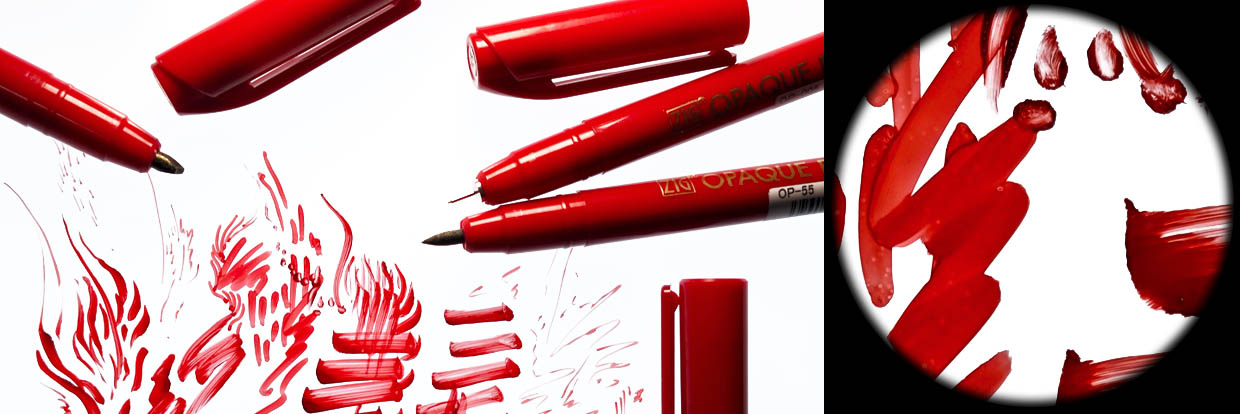
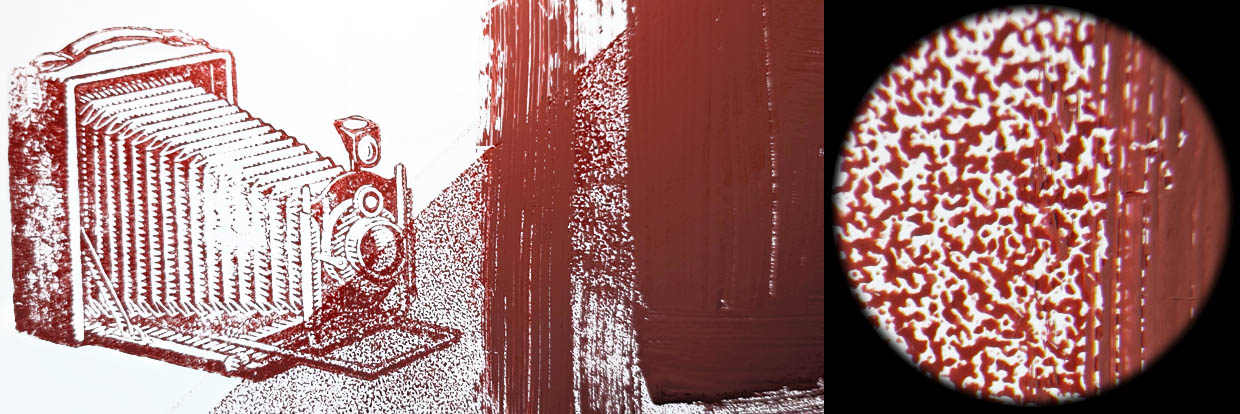
Acrylic gouache paints offer high opacity, flexibility and expressive finishes depending on the tools used. They can be applied with brushes, sponges or rollers. Once dry, the paint can be scratched or scraped, making it ideal for working by addition (positive), subtraction (negative) or a combination of both. Tools can be cleaned with water.
Traditionally, colors such as "Mars red" or "English red" were commonly used, although any color offering strong visual contrast can be suitable.
Manual Film Positives with Posca Markers – Instant Opacity for Lines and Large Areas
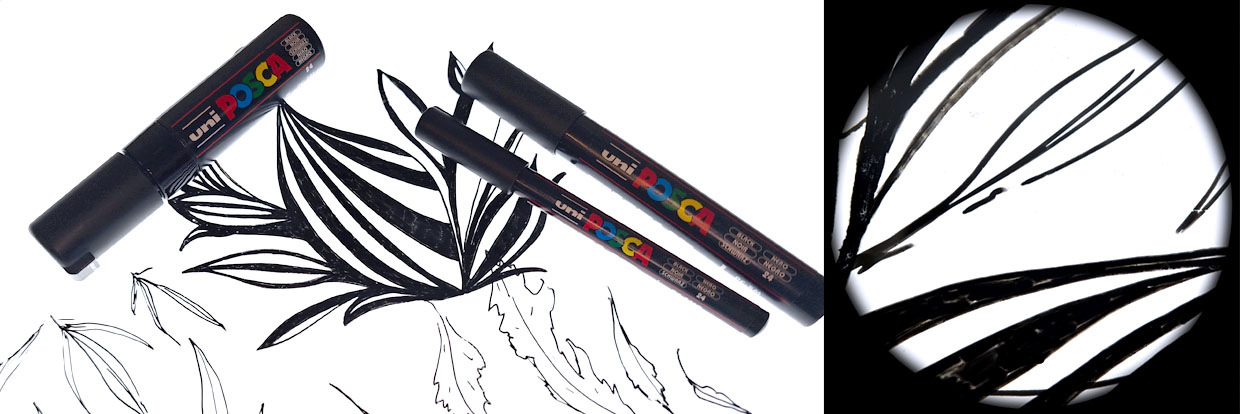
Posca markers are well known in graphic design and illustration. Their water-based ink formulation provides excellent opacity and adheres well to most non-porous surfaces. On porous materials they still offer good adhesion and strong coverage, making them especially useful for screen printing and offset processes.
Manual Film Positives with Solid Markers (Sakura Solid Marker) – Expressive and Durable Strokes
Solid markers use a malleable ink that dries and hardens on almost any surface within a few minutes. Once dry, the mark is highly resistant to friction. The drying time allows the surface to be scratched or manipulated before fully hardening, enabling expressive and highly graphic results.
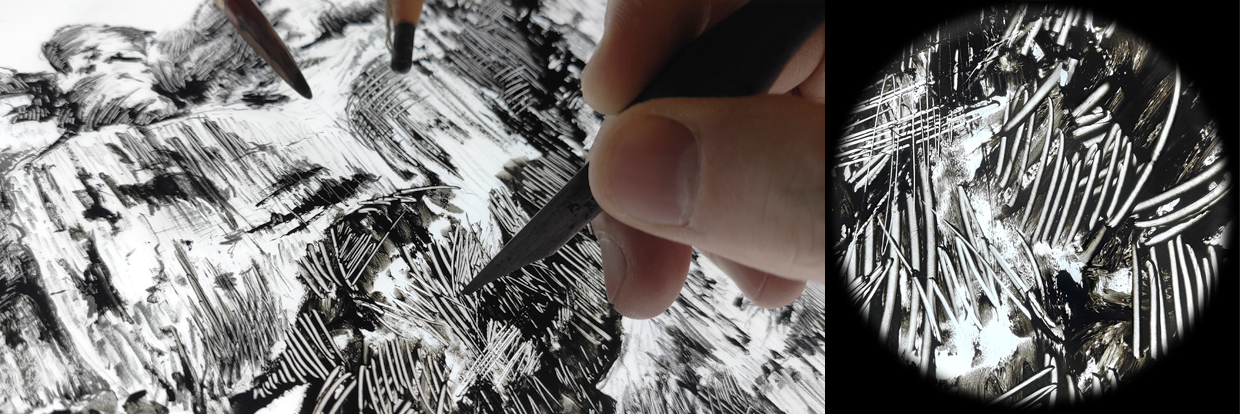
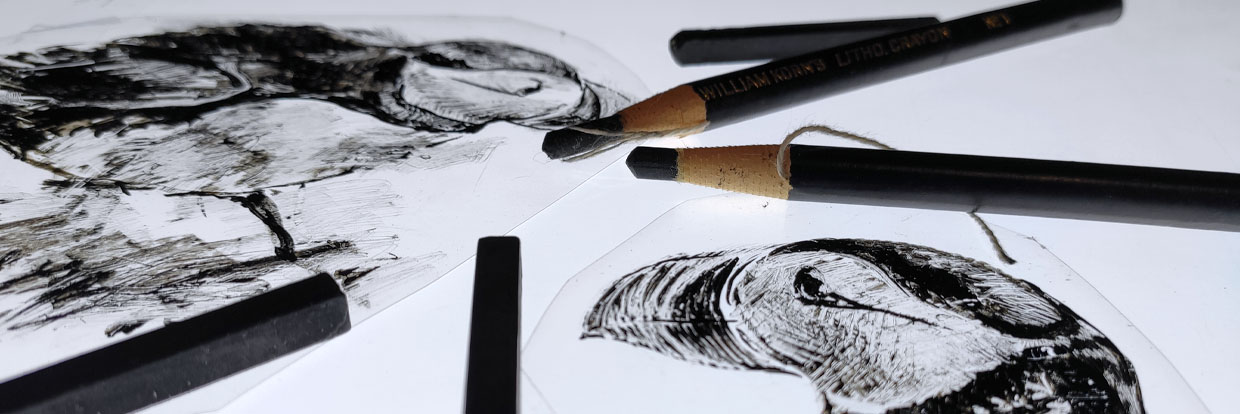
Manual Film Positives with Greasy Lithographic Materials – Pictorial Graphic Textures
Materials traditionally used for drawing on lithographic stones or grained plates have greasy properties and generally offer good opacity. They are particularly suitable for creating expressive, pictorial textures and organic graphic marks.
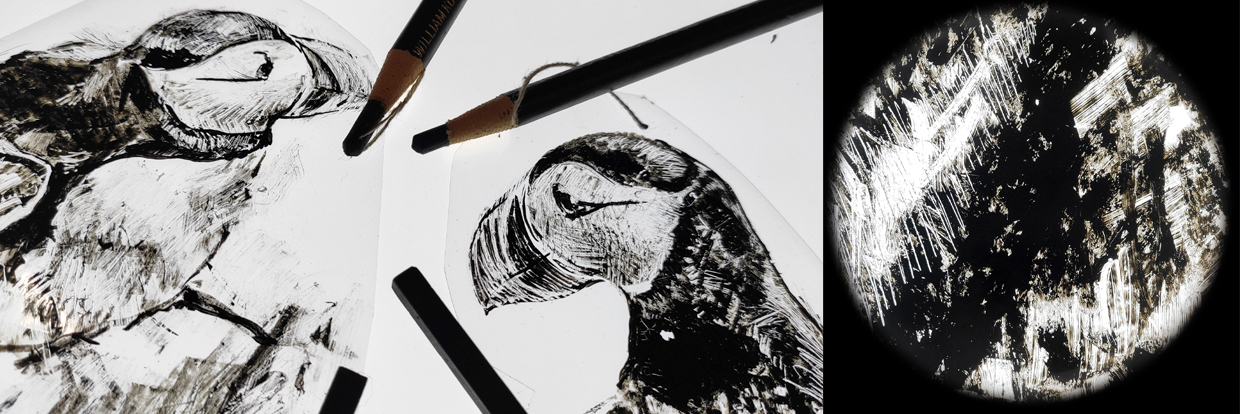
Manual Film Positives with Graphite, Pencil and Other Drawing Tools – Tonal Richness in Photographic Techniques
Standard drawing tools such as graphite and pencils can be used in specific cases to create film positives.
However, they are only suitable for techniques capable of reproducing very subtle tonal variations, such as photopolymer plate engraving or heliogravure. They are generally not recommended for screen printing due to insufficient opacity.
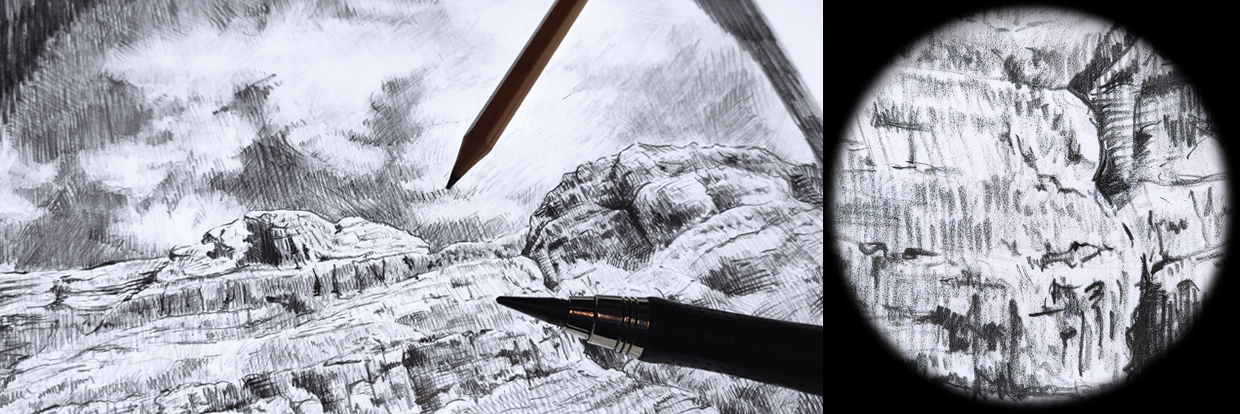
Manual Film Positives with Toner – Pictorial Washes and Sediment Effects
Toner is a powder composed of iron oxide and plastic-based compounds. It is fixed to surfaces using heat (thermofusion) and is commonly found in laser printers and photocopiers. Toner can be diluted in alcohol and applied as a wash. Once the alcohol evaporates, the toner must be fixed using heat, for example with a heat gun.
Toner is toxic and must be handled with appropriate safety measures.
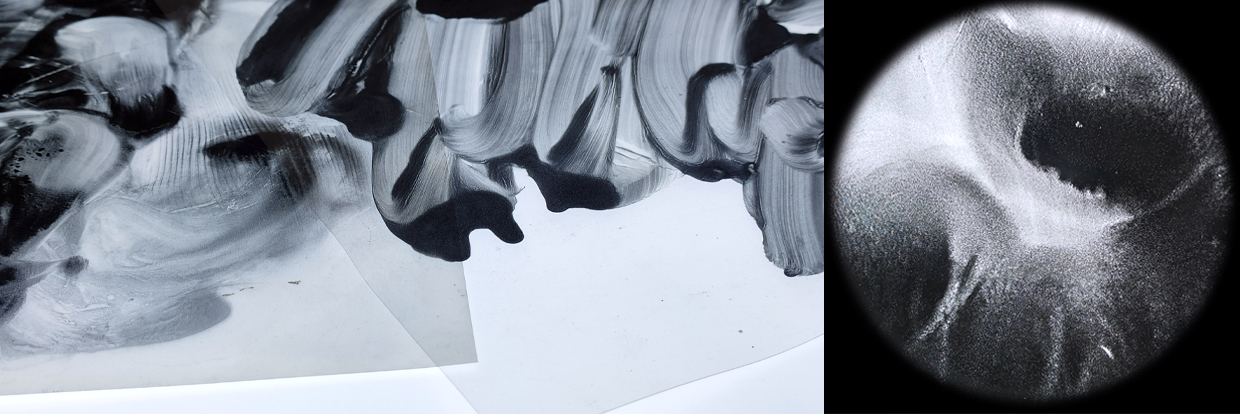
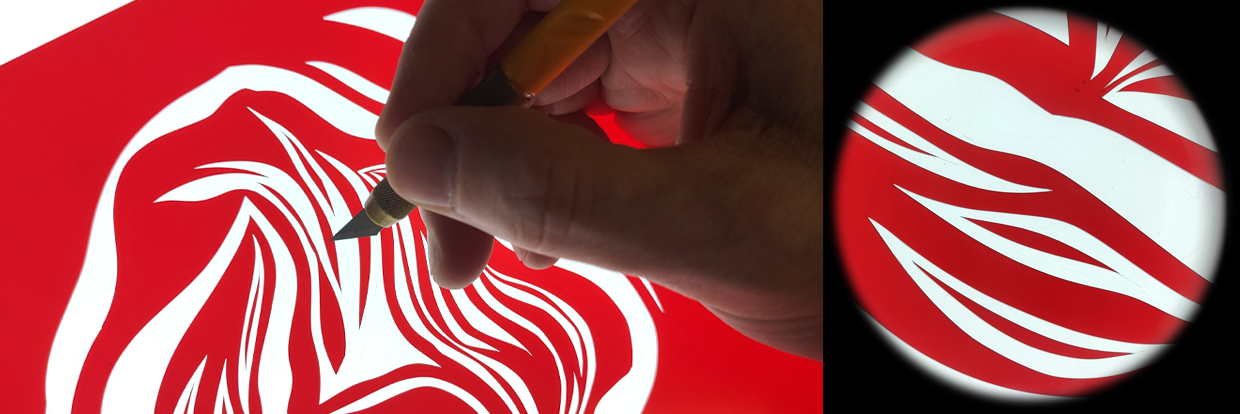
Manual Film Positives with Actinic Cutting Film – Sharp Edges and Maximum Precision
Actinic cutting film is a fully UV-blocking film, typically between 80 and 150 microns thick, mounted on a transparent carrier. The image is created by cutting and removing unwanted areas. The resulting positives offer extremely sharp edges and precise curves.
Historically, this material was widely used in graphic design studios for preparing originals and production-ready positives.
All these materials can also be used to retouch or enhance digital film positives, creating hybrid workflows. In such cases, we recommend intervening after the digital positive has been printed or imaged.
When combining multiple tools, always consider their material properties. Dry techniques should generally be applied last.
Soportes Transparentes para Hacer Fotolitos Manuales
Lo importante de un soporte para fabricar un positivo es que cumpla los siguientes requisitos:
- Tenga una buena transparencia y permita una buena transmisión de la luz.
- Recoja el material con el que se pretende dibujar.
- Extraiga el máximo partido de las herramientas o materiales con los que se trabaja.
- tenga una buena transmisión.
Como soportes más habituales podemos utilizar
- Acetatos o astralones de montaje de alrededor de 100 micras. Son transparentes, tienen una buena transmisión y son muy finos. Ideales para usar rotuladores, opacadores, o crear trabajaos con acrílico o Guasch.
- Poliéster rugoso o poliéster para impresión láser. Es un material termoestable. Ideal para trabajar con materiales que necesitan calor para ser fijados, como el polvo de tóner. La textura de este poliéster también es perfecta para trabajar con materiales secos como ceras, lápices o barras litográficas.
- Poliéster para Inkjet. Tiene una película lechosa especial para retener la tinta inkjet. Se pueden utilizar, pero no sería lo más recomendado.
- Papel vegetal. No transmite bien la luz, no es estable con materiales acuosos. Poco recomendable para hacer fotolitos.
- Papel sulfurizado. Sucede lo mismo que con el papel vegetal y además suele ser más grueso, peor poder de transmisión.
- True Grain. Soporte específico para trabajar con materiales de dibujo y crear positivos manuales.
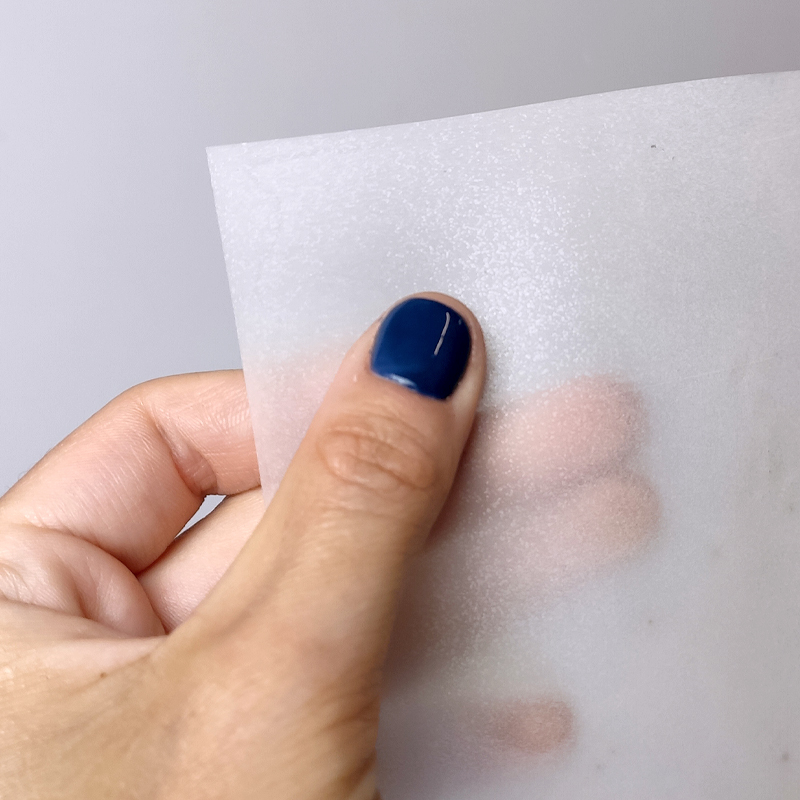
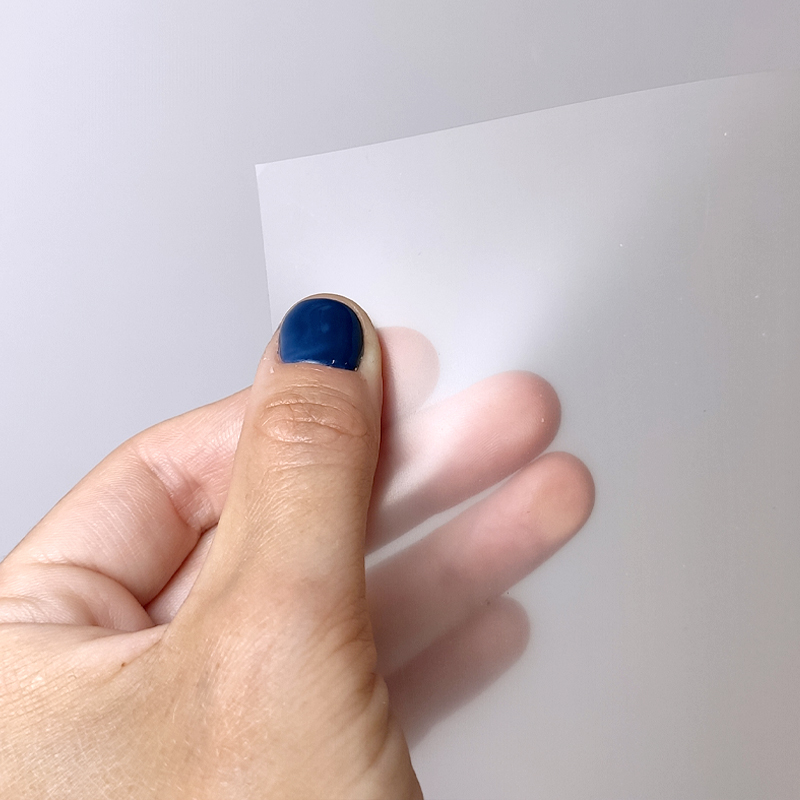
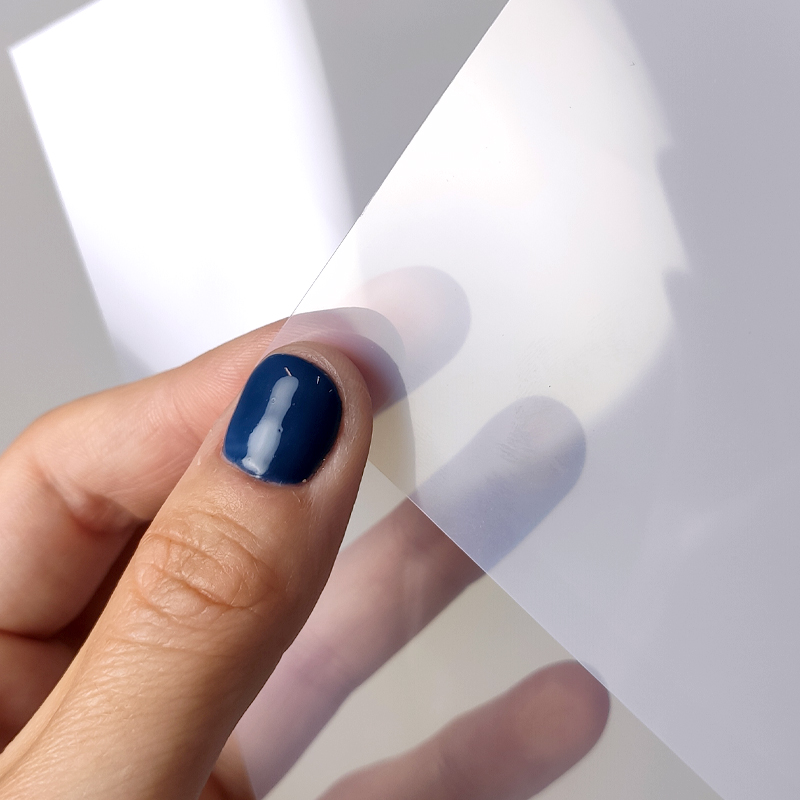
Aquí te presentamos varios materiales con los que podrás crear tus propios fotolitos manuales. De izquierda a derecha: True Grain, poliéster láser y acetato o astralón de montaje.
Transparent Supports for Making Manual Film Positives
A suitable support for making film positives should meet the following criteria:
- High transparency and good light transmission
- Compatibility with the chosen drawing material
- Ability to maximise the graphic qualities of the tools used
Commonly used supports include:
- Clear acetate or mounting films (around 100 microns) – Very transparent and ideal for markers, opaque pens and acrylic applications
- Matte polyester for laser printing – Thermally stable, ideal for toner and dry materials
- Inkjet polyester films – Usable but generally not recommended for manual techniques
- Tracing paper – Poor light transmission and unstable with water-based materials
- Glassine paper – Similar limitations to tracing paper, with greater thickness
- True Grain – A specialist translucent surface designed for manual drawing and film positive creation
Advantages and Disadvantages of Tools for Manual Film Positives
Comparing different tools helps select the right material depending on the technique, opacity requirements and desired graphic result.
Main Characteristics of Manual Film Positive Materials
Comparing the tools for making manual photoliths allows you to choose the right material according to the technique, the required opacity and the type of graphic reproduction.
|
Tools |
Opacity |
Endurance |
Drying |
Graphic Features |
Supports |
Recommended Techniques |
|
Inactinic Markers |
Medium-High |
High |
Fast |
Fine line, retouching, marker stroke |
Transparent films |
Photolith retouching, registration |
|
Acrylic Gouache |
High |
High |
Medium-Slow |
Pictorial texture, scratchable surface |
Most surfaces |
Screen printing, offset |
|
Posca Markers |
High |
Low (it scratches) |
Fast |
Opaque masses, marker stroke |
Most surfaces |
Screen printing, offset |
|
Solid Maker |
Very High |
Very High |
Slow |
Thick strokes, textured marks |
Any surface |
Screen printing, offset |
|
Greasy lithographic materials |
High (with tonal variation) |
Medium |
N/A |
Pictorial texture |
Rough Suports |
Lithography, photopolymer |
|
Graphite / pencil |
Low |
Low |
N/A |
Soft tones |
Papeles, True Grain, matte polyester |
Photopolymer engraving |
|
Toner |
Medium |
Medium |
N/A |
Wash-like lithographic textures |
Acetate, polyester |
Offset lithography, photo-engraving |
|
Cutting film - Rubylith |
Very High (UV blocking) |
Very High |
N/A |
Sharp, clean edges |
Transparent (own) |
Screen printing, offset |
Frequently Asked Questions About Manual Film Positives
What is a manual film positive and what is it used for?
A manual film positive is a hand-drawn graphic positive created on a transparent or translucent support. It controls which areas are exposed to light in photomechanical processes such as screen printing, offset, photopolymer engraving or cyanotype.
What is the difference between a manual and a digital film positive?
Digital film positives are generated using laser or inkjet printers on specialist films. Manual film positives are created directly by hand using graphic tools. Digital positives offer precision, while manual positives allow greater artistic freedom and experimentation.
What materials can be used to make film positives at home?
Actinic markers, Posca markers, solid markers, lithographic greasy materials, toner, cutting films and even graphite on textured supports can be used, depending on the technique.
Which supports are best for manual film positives?
Clear acetate, matte polyester for laser printers, inkjet polyester, True Grain and tracing paper are commonly used. Maximum transparency is recommended for screen printing, while textured supports are better suited for photopolymer and lithographic techniques.
Can manual and digital techniques be combined?
Yes. It is common to print a digital positive and then intervene manually using markers, toner or cutting film to achieve hybrid results.
Which technique is best for beginners?
For beginners in screen printing, Posca markers on acetate or polyester are a practical and accessible option due to their immediate opacity and ease of use.
Where can I buy materials for manual film positives?
At Rittagraf you will find markers, polyester films, acetate sheets and specialised materials for creating both manual and digital film positives.
For further information, we recommend visiting our complete guide to film positives.