What is Cyanotype
Cyanotype is one of the oldest photographic processes still in use today. The technique was developed by John Herschel in 1842, and for many years it was widely used to reproduce architectural and technical drawings, which is why it is often referred to as blueprint.
This process, closely linked to the early experiments of photography, allows images to be created through the direct action of light on a mixture of photosensitive iron salts.
Cyanotype is based on a diluted mixture of potassium ferricyanide and ferric ammonium citrate. When this solution is applied to a surface and exposed to sunlight or ultraviolet light, a chemical reaction alters the emulsion. After rinsing with water, the image appears.
Although the name comes from the word cyan, the colour that actually develops is Prussian blue, one of the most recognizable colors in historical photographic processes. Areas that have not been exposed to light dissolve during the washing stage.
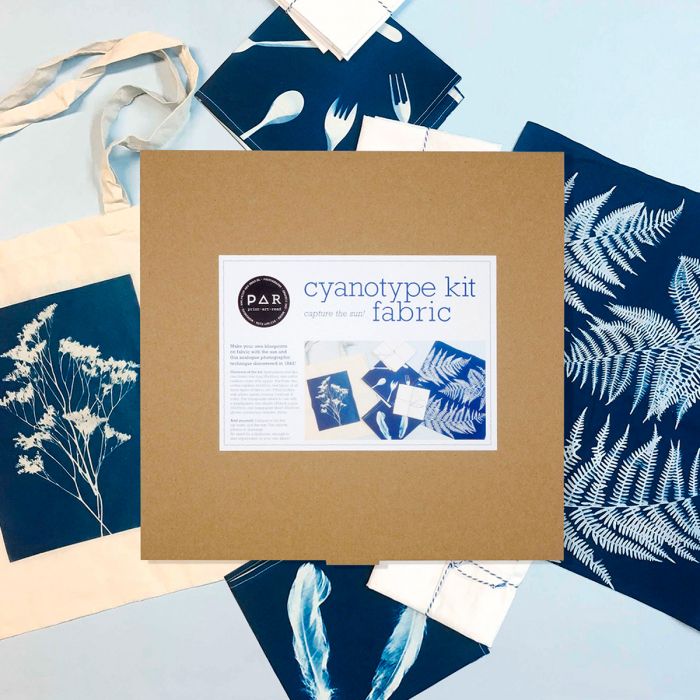
While cyanotype has traditionally been used on paper, it also works extremely well on natural fabrics such as cotton or linen, allowing textile prints to be created through a completely analog photographic process.
This kit is designed specifically for that purpose: experimenting with cyanotype on fabric in a simple way and without the need for a photographic darkroom.
What is Included in this Cyanotype Textile Kit
The kit includes all the materials required to prepare the photosensitive emulsion and apply it to different types of fabric.
Contents of this textile cyanotype kit:
-
Step-by-step instructions with specific advice for working on textiles (English, French, German and Dutch)
-
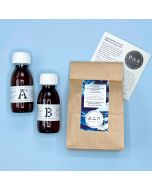
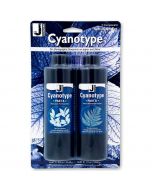
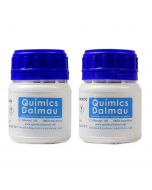
2 bottles of 250 ml with the photosensitive components used to prepare the solution
-
Linen bag 38 × 42 cm (tote bag style)
-
Cotton cushion cover with zipper 40 × 40 cm
-
2 cotton fabric napkins 40 × 40 cm
-
Fabric samples for testing
-
Protective gloves
-
5 inkjet printable transparencies
-
100 ml measuring cylinder
-
Roller tray
-
Roller for applying the emulsion onto fabric
-
Black and transparent sheets to assist exposure
-
Mixing rod
The kit comes packaged in a complete box ready to use, making it an interesting option for workshops, courses or as a gift for people interested in alternative photography.
What You Can Do with this Kit
Cyanotype allows you to work with a wide variety of visual elements.
Some common possibilities include:
-
Creating solar prints on tote bags or textile surfaces
-
Printing photographs using negatives or transparencies
-
Working with leaves, flowers or natural objects
-
Creating unique textile pieces through sun exposure
-
Experimenting with drawings or illustrations printed on transparencies
The chemical mixture included in the kit allows you to work with the fabrics provided and continue experimenting later with other textiles.
A Kit Designed for Textile Experimentation
One of the most interesting aspects of cyanotype is that it does not require a traditional photographic darkroom.
Unlike many photographic processes, the chemicals can be prepared in dim light and the exposure stage is accessible to almost anyone. The results appear quickly and the process itself is relatively simple.
To work with this system you only need to:
-
Prepare the emulsion
-
Apply it to the chosen surface
-
Place objects or negatives on the dried emulsion
-
Expose to sunlight or a UV light source
-
Rinse with water
Within minutes the image appears in the characteristic deep blue of cyanotype.
This makes the technique very attractive for artists, photographers, educational workshops and experimental graphic projects.
Responsible Production
The kits from the Dutch manufacturer PAR (Print-Art-Read) are assembled in a local workshop in the Netherlands that provides employment for people with difficulties accessing the labour market.
The product has also been designed with sustainability in mind:
Country of origin: European Union (Netherlands).
If You Want to Start with Cyanotype
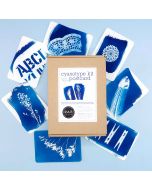
If you would like to explore cyanotype on paper first, you may also be interested in our Cyanotype Postcard Kit, a simple and accessible way to discover this historical photographic technique.
Exposure Options
Exposure can be done simply using sunlight, but it is also possible to work with UV lamps or exposure units, similar to those used in screen printing and other photomechanical processes.
Frequently Asked Questions
Do I need a photographic darkroom to use this kit?
No. The chemicals can be mixed in a dimly lit space without total darkness. Exposure can be done using sunlight or a UV lamp.
What fabrics work best for cyanotype?
Cyanotype works particularly well on natural fabrics such as cotton or linen, which absorb the photosensitive emulsion properly. It is always recommended to make small tests with other textiles.
Can I use photographs for cyanotype prints?
Yes. The kit includes transparent sheets that allow you to print images with an inkjet printer to create photographic negatives or transparencies.
How many prints can be made with this kit?
The chemical mixture included allows you to work with the fabrics in the kit and continue experimenting on additional textiles afterwards.
What should I do when the chemicals in the kit run out?
When the chemicals are finished, you can continue working with cyanotype refills or individual chemicals, available in our section for alternative photographic processes.
Are cyanotype textile prints resistant to washing?
Yes. If the process has been carried out correctly and the final washing step is done properly, cyanotype prints on fabric are generally wash resistant.