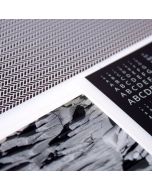
Matte Laser Film for Film Positive Printing
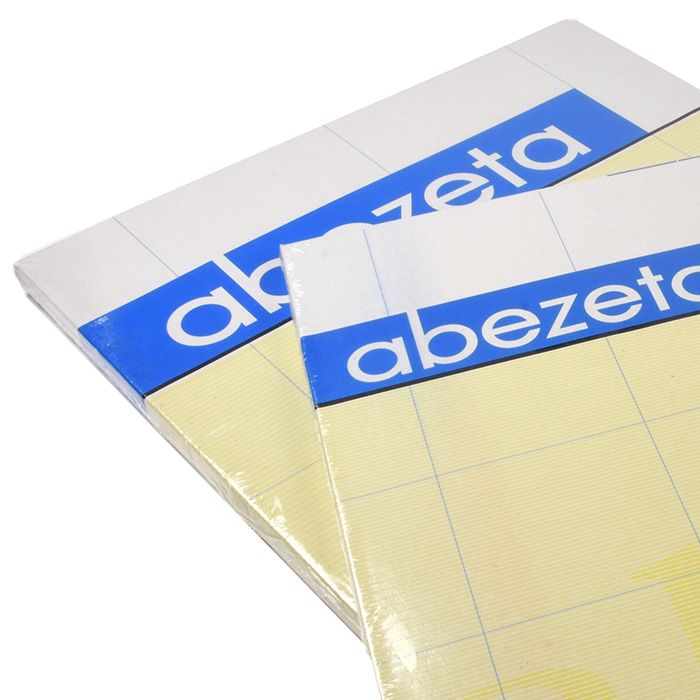
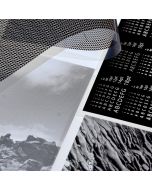
This 96-micron Abezeta matte laser polyester film is a translucent substrate designed for producing film positives using compatible laser printers and photocopiers.
The 100-sheet box is particularly suitable for screen printing workshops, printmaking studios, schools, artists and professionals who regularly produce film positives and require a consistent, stable substrate.
Its matte, slightly textured surface can be worked on both sides, while its dimensional stability helps maintain image geometry throughout printing and subsequent exposure processes.
Film Positives for Screen Printing and Other Photomechanical Processes
This polyester film can be used to prepare positives for processes in which an opaque image must selectively block light during exposure.
Applications include screen printing, offset, photopolymer plate making, photogravure, letterpress and other photomechanical techniques.
For screen printing, it provides a practical way of producing positives directly from a laser printer for exposing coated screens. Final quality will depend on the film as well as printer resolution, toner characteristics, optical density and exposure conditions.
For line work, typography and many types of graphic imagery, laser printing can provide very satisfactory results without requiring more complex film-positive production systems.
Toner Density and Opacity in Laser Film Positives
Compared with traditional electronic imagesetting and certain inkjet systems specifically configured for film-positive production, laser printing will generally produce a lower maximum toner density. Nevertheless, it offers a practical and cost-effective solution for many screen printing and photomechanical applications.
When greater black opacity is required, dedicated toner densifiers such as Densitone Spray or Kopimask Limpiafilm can be used.
These products can improve the printed image's ability to block light during exposure. As toner formulations, printers and printing systems vary considerably, we recommend testing before establishing a definitive production workflow.
Technical Characteristics of the Matte Laser Film
In addition to the optical density of the printed black, a film positive should be assessed according to the amount of light transmitted through its unprinted areas. For this reason, the matte appearance of a polyester film should not automatically be interpreted as poor light transmission.
Printing technology: Laser
Finish: Matte / translucent
Nominal thickness: 96 µm
Film DMin: [measurement pending]
Reference DMax: [measurement pending]
Light transmission: [measurement pending]
Sizes: A4 / A3
Contents: 100 sheets
Matte Polyester for Hand-Drawn Film Positives
The matte, slightly textured surface provides another useful advantage: in addition to digital printing, the sheets can be used to create film positives by hand.
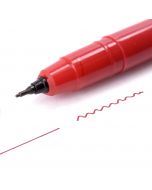
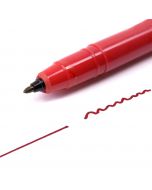
Opaque and actinic-blocking markers, India ink, acrylics and other liquid media can be combined with pencils, wax crayons, graphite and dry drawing materials to produce lines, textures, marks and tonal effects.
This makes the material particularly useful for fine-art screen printing, experimental printmaking, photopolymer work, art schools and hybrid graphic processes combining hand drawing with digital imagery.
Laser or Inkjet Film: Which Should You Choose?
The choice depends primarily on the printer available and the requirements of the photomechanical process.
This 96-micron polyester is designed for laser printers. Inkjet printing requires film with a dedicated ink-receptive coating.
Our inkjet alternatives include 125-micron Inkjet Clear Polyester Film and 100-micron Matte Inkjet Polyester Film, the latter being particularly useful when high black density is required for demanding applications such as photogravure, photopolymer plate making or letterpress.
More Information About Film Positives
For more information about preparing originals, film materials, opacity and exposure, see our Complete Guide to Film Positives.
For drawing, textures and analogue processes, you can also consult our tutorial on creating film positives by hand.
Professional Film Positive Printing Service
If you prefer to receive a finished positive or require greater control over its production, Rittagraf also offers a professional inkjet film-positive printing service for screen printing, photogravure, photopolymer plate making, letterpress, offset and other photomechanical processes.
Frequently Asked Questions About Matte Laser Film
What does the box contain?
The box contains 100 sheets of 96-micron matte laser polyester film. A4 or A3 can be selected from the product options.
Can I use these sheets in an inkjet printer?
No. They are intended for laser printing. Inkjet printers require film with a dedicated ink-receptive coating.
Are they suitable for screen printing positives?
Yes. They can be used to produce film positives for exposing screen printing emulsions, provided that the printed image achieves sufficient density to block the required amount of light during exposure.
How can I obtain a more opaque black from a laser printer?
In addition to optimising the printer settings, dedicated toner densifiers such as Densitone Spray or Kopimask Limpiafilm can be used. Results can vary depending on toner formulation, so we recommend carrying out a preliminary test.
Does the matte finish reduce light transmission?
A matte appearance should not automatically be interpreted as poor transmission. For photomechanical applications, both light transmission through the clear areas and optical density in the printed areas should be considered.
Is it suitable for photogravure, photopolymer or letterpress?
Yes. It can be used for these processes. When particularly high density or very precise control over film transmission is required, we recommend testing and comparing the result with Matte Inkjet Film.
Can I draw directly onto the polyester?
Yes. Its matte surface accepts various dry and liquid drawing materials, making it suitable for hand-drawn film positives and autographic positives.