What Is SolarFast?
SolarFast is a photographic printing system based on light-sensitive dyes developed by Jacquard. It belongs to a family of light-sensitive materials used in solar printing and other UV-based image-making processes, where exposure to ultraviolet light creates permanent images on a wide range of surfaces.
Its working principle shares similarities with classic alternative photography processes such as cyanotype, Van Dyke Brown, salt printing and other historic UV-based printing techniques. The main difference is that, instead of producing monochromatic images through metal-salt chemical reactions, SolarFast uses photosensitive dyes capable of generating images in a wide range of colours.
Exposure to sunlight or artificial UV light develops the image directly on the chosen surface, allowing artists to work with digital negatives, transparencies, objects, plants, lace, tools or any material capable of partially or completely blocking light.
The 118 ml (4 oz) size is the most popular option for discovering SolarFast, testing colours, developing personal projects or exploring the creative possibilities of solar printing on fabric and paper. If you're looking for a first introduction to the technique, you can also consider the SolarFast Starter Kit, which includes several colors and the materials needed to get started.
Thanks to its unique combination of photography, textile printing and artistic experimentation, SolarFast has become one of the most widely used systems within contemporary alternative photography.
How SolarFast Works
SolarFast is applied directly onto the chosen surface. Once applied, a photographic negative, transparency or object is placed over the coated area and exposed to sunlight or a UV light source. After exposure, washing with SolarFast Wash removes any unreacted dye, revealing a clean and permanent image.
Unlike other alternative photographic processes such as cyanotype, SolarFast is designed to be exposed while the material still retains some moisture. If the dye is allowed to dry completely before exposure, colour intensity may be reduced. For this reason, many users achieve the strongest and most vibrant results when the coated surface remains slightly damp.
Another advantage of SolarFast is its simplicity. There is no need to mix chemicals, prepare emulsions or follow complex coating formulas before printing.
Printing on Fabric and Paper with SolarFast
Although SolarFast was originally developed for use on natural fibres, it also performs exceptionally well on many porous materials commonly used in alternative photographic printing and handmade printing techniques.
Suitable surfaces include:
-
Textile printing on cotton, linen, silk and canvas.
-
Fine art papers, printmaking papers and watercolour papers.
-
Cardboard, wood and other porous materials.
On natural fabrics, SolarFast produces wash-resistant images while maintaining the original flexibility and feel of the material. The dye penetrates the fibres without significantly altering the texture of the fabric, resulting in sharp and highly detailed reproductions.
This makes SolarFast particularly attractive for textile artists, illustrators, fashion designers, art schools and creative workshops.
SolarFast vs Cyanotype
SolarFast is often compared with cyanotype and other UV-based photographic printing techniques. While both processes use light to create images, they differ significantly in their chemistry, appearance and applications.
A menudo se suele comparar el Solar Fast con materiales, reactivos solares u otras técnicas prefotográficas. La cianotipia es una de las más habituales en estas comparaciones; estas son algunas de las diferencias más evidentes entre ambas:
| SolarFast |
Cyanotype |
| Available in multiple colours |
Characteristic Prussian Blue image |
| Ready-to-use product |
Requires emulsion preparation |
| Highly suitable for textile printing |
Traditionally used on paper |
| No chemical mixing required |
Requires mixing sensitising solutions |
| Processed with SolarFast Wash |
Developed and washed with water |
If cyanotype represents one of the most iconic historic photographic processes, SolarFast can be viewed as a contemporary evolution of solar printing, designed for creating permanent photographic images on fabric, paper and other creative surfaces.
Creative Applications of SolarFast
SolarFast can be used to create textile artwork, photograms, photographic prints from digital negatives and a wide range of experimental image-making projects. It also combines particularly well with screen printing, batik, textile painting, mixed media artwork and contemporary alternative photography practices.
Many artists use SolarFast as a bridge between historic photographic processes, handcrafted printing techniques and modern creative experimentation.
Available Colours
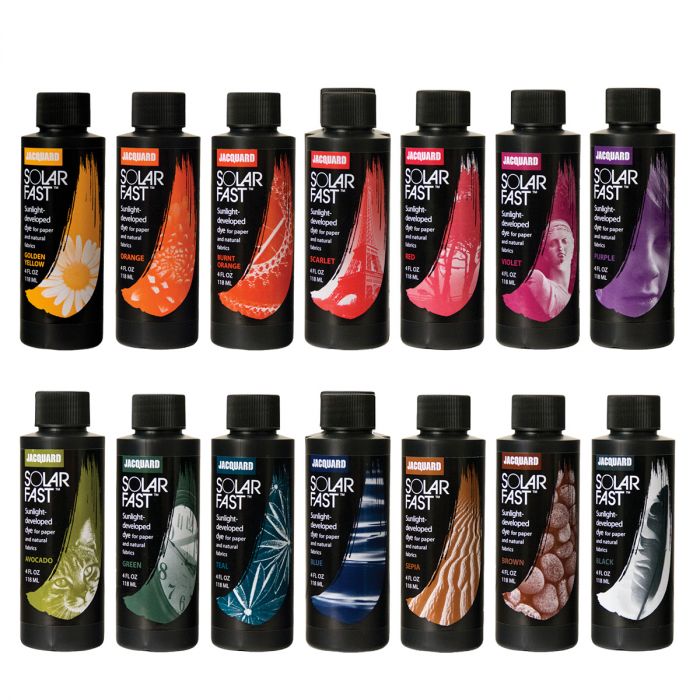
SolarFast is available in the following colours:
Golden Yellow · Orange · Burnt Orange · Scarlet · Red · Violet · Purple · Blue · Teal · Green · Avocado · Sepia · Brown · Black
All colours can be mixed together to create custom shades and expand creative possibilities.
Working with Digital Negatives and Photographic Transparencies
The quality of the negative or transparency has a direct impact on the final image, whether you are working with SolarFast, cyanotype, Van Dyke Brown, salt printing or other contact printing techniques.
If you would like to learn more about creating digital negatives, photographic transparencies or handmade film positives for alternative photography and UV printing processes, we recommend exploring our specialised tutorials:
• Complete Guide Digital Negatives and Photographic Transparencies
• How to Create Handmade Film Positives Step by Step
SolarFast: Colour Solar Printing
Unlike traditional processes such as cyanotype or Van Dyke Brown, SolarFast allows permanent photographic images to be created in colour on fabric, paper and other porous materials.
Its ease of use, broad colour palette and compatibility with both sunlight and UV exposure systems have made it one of the most popular materials among artists, photographers, educators and creative workshops interested in solar printing, sun printing and alternative photography.
FAQs About SolarFast 118 ml
How Much Surface Can 118 ml Cover?
Coverage depends on the absorbency of the material and the application method used. Fabric generally absorbs more dye than paper, while brushes, rollers and other tools may also affect consumption.
The 118 ml (4 oz) format is designed primarily for colour testing, personal projects, workshops and first experiences with SolarFast. For larger projects and more intensive use, SolarFast is also available in a 236 ml format.
Can SolarFast Be Used with UV Lamps?
Yes. Although SolarFast was originally developed for use with sunlight, it also works extremely well with UV lamps, exposure units and other UV light systems commonly used in screen printing, photomechanical processes and alternative photography.
Using artificial UV light can provide more consistent exposure conditions throughout the year.
Does SolarFast Need to Be Dry Before Exposure?
No. Unlike cyanotype and some other alternative photographic processes, SolarFast is designed to be exposed while the coated surface still retains some moisture.
If the dye is allowed to dry completely before exposure, colour intensity may be reduced. On the other hand, excessive moisture can sometimes lead to condensation beneath the negative or transparency.
For this reason, many users achieve the best results when SolarFast is slightly damp at the moment of exposure.
Is SolarFast Wash Necessary?
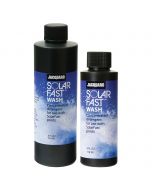
Yes. SolarFast Wash is specifically formulated to remove unexposed dye after printing and helps improve image clarity, contrast and long-term permanence.
Using SolarFast Wash is particularly important when printing on fabric, where proper washing helps prevent unwanted staining and improves overall image quality.
Can Colours Be Mixed?
Yes. All SolarFast colours are fully mixable, allowing artists to create custom shades and significantly expand their creative options. Multiple exposures using different colours can also be layered for unique visual effects.
Can I Print Photographs Using Digital Negatives?
Yes. SolarFast works exceptionally well with digital negatives printed onto inkjet transparency film, allowing photographs, illustrations and digital artwork to be reproduced with a high level of detail on both paper and fabric.
This makes it possible to reproduce photographs, illustrations and digital artwork with a high level of detail on both paper and fabric, making SolarFast one of the most versatile materials available for contemporary alternative photography and solar printing.
SolarFast: An Accessible Introduction to Alternative Photography
SolarFast offers an accessible way to explore alternative photography without preparing emulsions or working with complex chemical formulas.
Its ease of use, wide colour range and compatibility with fabric, paper and other creative surfaces have made it one of the most popular entry points into contemporary solar printing and alternative photographic processes.
The 118 ml format is ideal for testing colours, learning the technique, developing personal projects and experimenting with digital negatives, objects and photograms before moving on to larger-scale productions.